

Antibiotic Resistance in Wastewater Surveillance
Under the European Urban Wastewater Directive (EU) 2024/3019, the monitoring of antimicrobial resistance will become an integral part of urban wastewater surveillance. For urban areas with 100,000 population equivalents or more, corresponding AMR monitoring is planned for the future.
At the same time, the nationwide AMELAG project (Wastewater Monitoring for Epidemiological Situation Assessment) is investigating how antimicrobial resistance in wastewater can be systematically recorded and monitored over extended periods. In this context, vermicon’s qPCR test kits and workflows are already being used for the quantitative analysis of selected antibiotic resistance genes.

Expertise in Wastewater Microbiology
For about 30 years, the microbiology of complex wastewater systems has been at the heart of vermicon’s work. Our many years of experience with wastewater matrices, biocenoses, and microbiological processes form the foundation for the development of reliable analytical methods specifically designed for wastewater.
Experience in Epidemiological Wastewater Monitoring
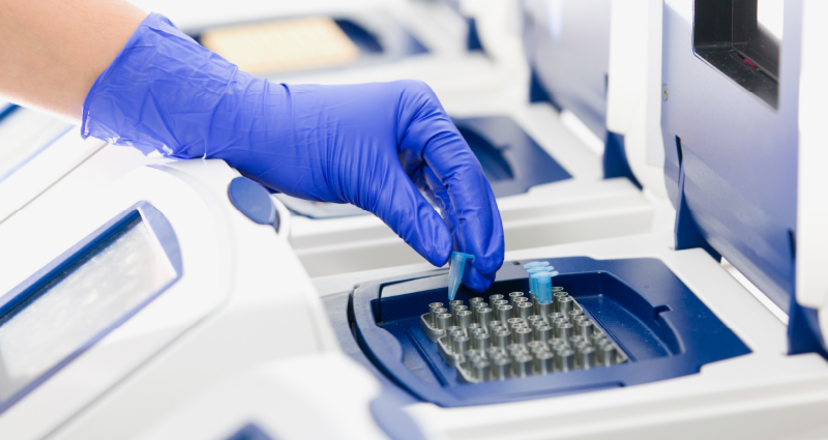
Since 2020, vermicon has been developing solutions for wastewater-based epidemiology and the monitoring of health-related parameters. Together with partners such as HTS Labs, we combine wastewater-specific analytics with standardized and scalable processes for long-term monitoring programs.

Proven Analysis and Data Generation
Since 2023, we have been actively participating in the AMELAG project, which is jointly conducted by the Robert Koch Institute (RKI) and the Federal Environment Agency (UBA). Building on our established viral analysis capabilities, we now also use the qPCR VIT® AMR workflows for the quantitative analysis of selected antibiotic resistance genes.
qPCR Workflow for Antibiotic Resistance Genes in Wastewater
Biological wastewater treatment is based on a highly complex microbial community known as a biocenosis. Billions of bacteria are responsible for the biological degradation of organic matter as well as the removal of nitrogen and phosphorus compounds. This high microbial diversity makes wastewater treatment plants highly efficient biological treatment systems, but also a scientifically challenging matrix for studying AMR.
Reliable results therefore require standardized workflows that are specifically tailored to the challenges of wastewater analysis. The qPCR VIT® AMR Workflow combines wastewater-specific sample preparation with the detection of selected clinically relevant antibiotic resistance genes using quantitative PCR (qPCR).
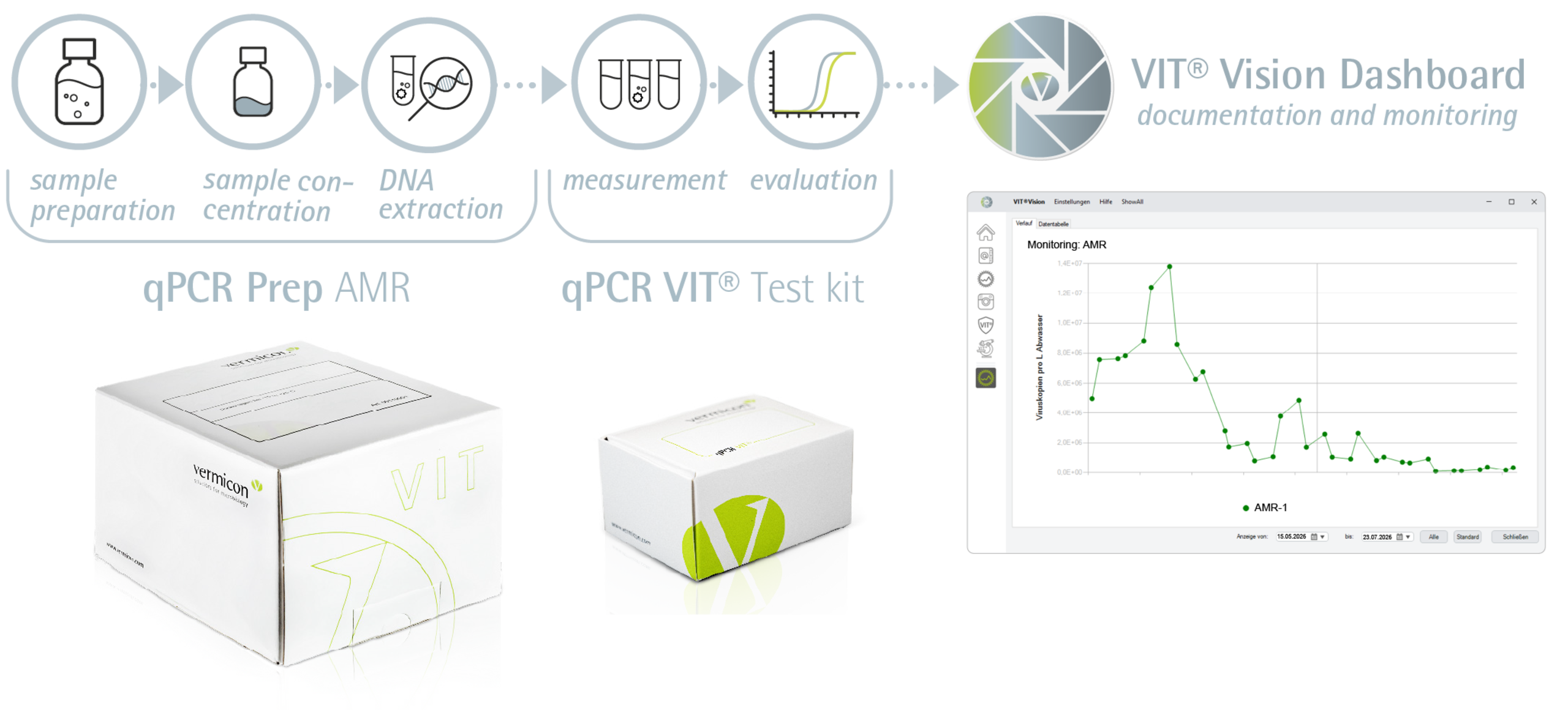
qPCR Prep AMR
Standardized preparation of wastewater samples and isolation of microbial DNA for subsequent AMR-qPCR.
- Optimized for complex wastewater samples
- Reduces interfering matrix effects and PCR inhibitors
- Designed for use with the qPCR VIT® AMR I and qPCR VIT® AMR II test kits
qPCR VIT® AMR I
Quantitative detection of carbapenemase- and ESBL-associated resistance genes:
- blaOXA-48-like
- blaKPC
- blaCTX-M
In addition, 16S rDNA is detected as a bacterial reference marker.
qPCR VIT® AMR II
Quantitative Detection of Carbapenem and Sulfonamide Resistance Genes:
- blaNDM
- sul1
DNA spike-in to verify the efficiency of sample purification using the qPCR Prep AMR Test Kit.
Why Test for Resistance Genes in Wastewater?
Antimicrobial resistance (AMR) is one of the greatest public health challenges worldwide. Antibiotic-resistant microorganisms complicate the treatment of bacterial infections and present new challenges for both health and environmental authorities. In addition to clinical surveillance, monitoring antibiotic resistance in environmental compartments is therefore becoming increasingly important.
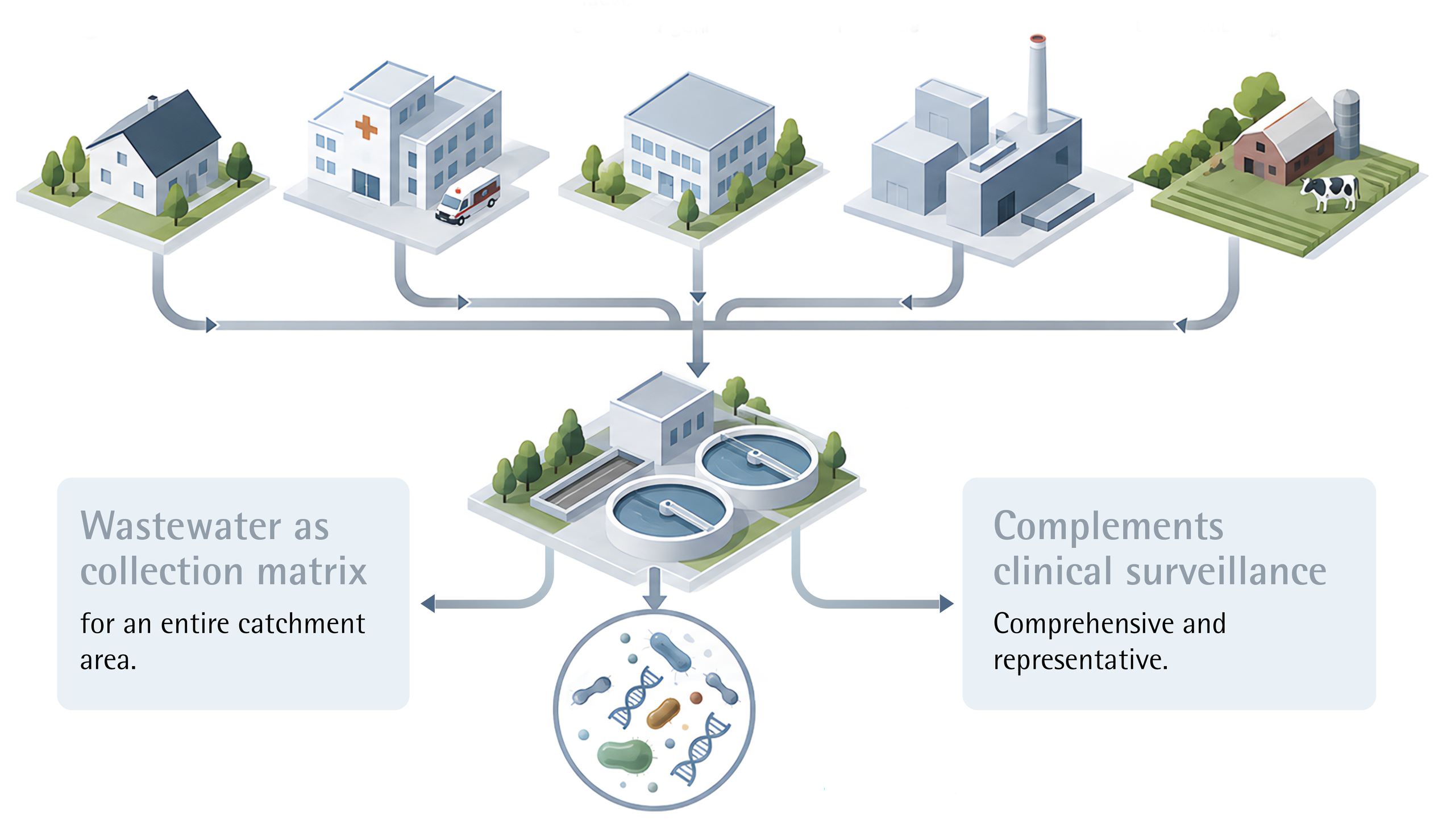
Wastewater plays a special role in this context. As a collection matrix, it brings together microorganisms and genetic material from various sectors of society, thereby providing a population-based perspective on the prevalence of relevant resistance genes. Sources of contamination include private households, hospitals, long-term care facilities, and commercial and industrial dischargers. As a result, wastewater provides a population-based overview of the prevalence of relevant resistance genes and complements clinical surveillance data by offering an additional perspective.
Additional qPCR Test Kits for Wastewater Surveillance
AMR is part of a broader epidemiological wastewater monitoring program. In addition to the qPCR VIT® AMR test kits, our portfolio offers solutions for sample preparation and the quantitative detection of other health-related parameters in wastewater, including SARS-CoV-2, influenza, H5N1, Mpox, RSV, and West Nile virus. Additional target parameters are currently under development.


You Might Also Be Interested In

Wastewater-based Epidemiology
Wastewater-based epidemiology is an effective tool to support public health management. The monitoring of health-relevant viruses and bacteria (e.g. SARS-CoV-2, influenza and RSV) in wastewater is not only a fast and cost-effective method, but also a…

Virus Detection
Our test kits enable continuous monitoring of health-relevant viral loads in wastewater samples. They are optimized for the specific requirements of the wastewater sector and enable precise evaluation of RNA and DNA virus particles.
Antibiotic Resistance in Wastewater | vermicon News
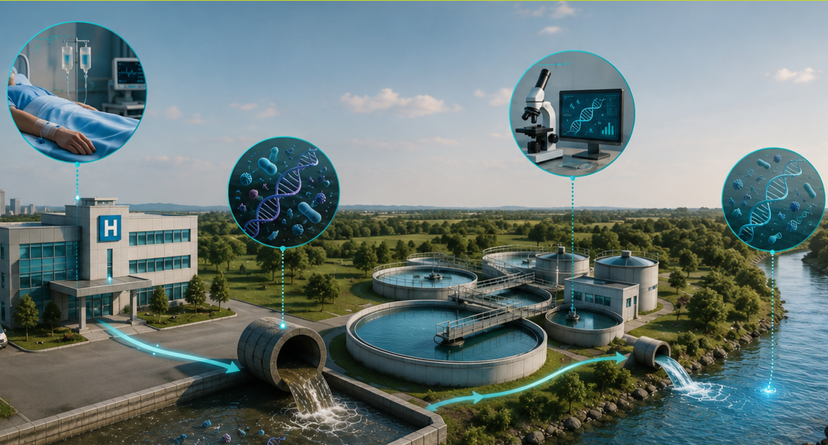
Antibiotic resistance enters wastewater treatment plants in the form of resistant bacteria, resistance genes and antibiotic residues. Once there, it does not simply disappear. Some is removed, some ends up in the sludge, and certain resistance genes…